
In every industry where sterilization matters, ethylene oxide sterilization continues to stand out for its unique benefits. Whether you are a device manufacturer worried about heat damage, a logistics professional trying to sterilize packed goods, a hospital tasked with cleaning delicate instruments, or a museum curator preserving fragile items, understanding the advantages of ethylene oxide sterilization can help solve your critical sterilization challenges effectively.
What Is Ethylene Oxide Sterilization?
Ethylene oxide sterilization, commonly called ETO sterilization, is a low-temperature method that uses ethylene oxide gas to kill bacteria, viruses, fungi, and spores on materials sensitive to heat or moisture. Unlike high-temperature steam sterilization, ETO works at 37–60°C, making it safe for plastics, electronics, and delicate instruments. The ethylene oxide sterilization process involves preconditioning with humidity control, injection of the gas, microbial exposure, and a final aeration phase to remove residual gas.
Key Advantages of Ethylene Oxide Sterilization
1. Low-Temperature Sterilization (37–60°C)
One of the primary ethylene oxide sterilization advantages is its gentle low-temperature cycle, which prevents heat damage to heat-sensitive plastics, polymers, and electronics. Device makers especially benefit because ethylene oxide sterilization protects costly and complex medical instruments that steam sterilization would otherwise deform or melt.
2. Deep Penetration into Complex & Closed Spaces
Ethylene oxide gas is highly penetrative, reaching inside lumens, joints, hinges, and multilayer packaging. This advantage benefits logistics teams sterilizing pre-packaged or already packed medical kits, ensuring product sterility without opening packages and risking contamination.
3. Safe for Delicate Optical Instruments & Electronics
Without moisture involved in the process, ETO sterilization protects delicate optical instruments, sensors, cameras, and scopes commonly used in hospitals. This ensures these critical devices remain functional and uncorroded, suitable for repeated sterilization cycles.
4. Material Compatibility with 95% of Medical Devices
ETO sterilization works safely on most medical device materials—plastics, rubbers, electronics, composites—without causing corrosion or deformation. This broad compatibility makes it the go-to sterilization method in healthcare manufacturing.
5. Sterilizes Without Unpacking
Ideal for supply chain efficiency, ethylene oxide sterilizes items inside their packaging. This greatly reduces contamination risks for pre-packaged sterile medical kits and food packaging, providing a critical advantage in logistics and supply chain workflows.
6. Effective Against All Microorganisms
From bacteria and spores to fungi and viruses, ethylene oxide sterilization boasts a comprehensive antimicrobial spectrum with a proven track record in hospitals and pharmaceutical industries. This reliability ensures patient safety and product integrity.
7. Ideal for Rare & Fragile Materials
Museums, archives, and conservation labs rely on ETO sterilization because it is free from heat and moisture. This advantage is crucial for preserving fragile artifacts like ancient manuscripts or delicate textiles that require sterilization without damage.
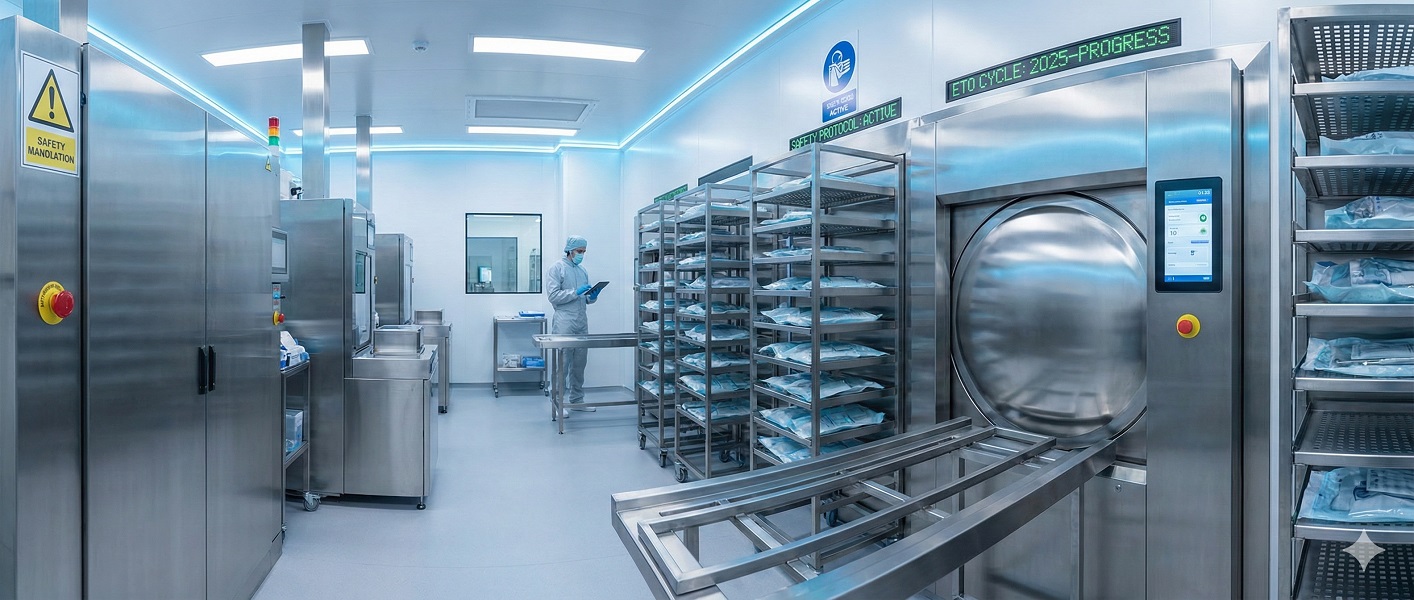
If you want to explore industrial-grade sterilizers engineered for these advantages, you can also review Equilateral Solutions’ Ethylene Oxide Sterilization Machine, designed for safe, compliant, and efficient ETO sterilization:
Why ETO Is Different: The Sterilization Process
The ethylene oxide sterilization process follows these main steps:
- Preconditioning: Products are conditioned for optimal temperature and humidity, ensuring effective sterilization.
- Gas Injection: ETO gas is introduced into a sealed chamber, mixed with carrier gases like CO2 or nitrogen.
- Exposure: Items are exposed for a specific duration allowing the gas to penetrate all surfaces, including complex lumens and multilayer packaging.
- Aeration: Products are ventilated to remove any residual ethylene oxide, ensuring safety.
This thorough process ensures sterility without damaging products, setting ETO apart from other sterilization types.
Real-World Uses Across Industries
Ethylene oxide sterilization uses are broad and crucial:
- Medical Device Manufacturing: Ensures sterility of heat-sensitive devices like catheters and pacemakers.
- Hospitals & CSSD Departments: Sterilizes delicate surgical instruments and optics safely.
- Pharmaceutical & Biotech Packaging: Maintains sterile packaging without compromising integrity.
- Logistics & Contract Sterilization Services: Enables packed sterilization for global supply chain efficiency.
- Museums, Archives & Conservation Labs: Protects valuable and fragile cultural artifacts.
Advantages vs Disadvantages: A Balanced View
While ethylene oxide sterilization has many advantages, it is not without disadvantages. The process requires lengthy aeration to remove toxic residues, strict safety protocols to handle flammable gas, and environmental controls to prevent emissions.
However, modern ETO sterilizers incorporate advanced safety features such as leak detection, exhaust scrubbers, and sealed chambers compliant with ISO standards. These innovations mitigate environmental and health risks, maintaining ETO’s status as a safe and effective sterilization choice.
Why ETO Remains the Gold Standard for Heat-Sensitive Products
Despite newer technologies, ethylene oxide sterilization advantages including unparalleled penetration, material compatibility, and regulatory acceptance keep it as the gold standard in 2025. Its gentle yet thorough sterilization process ensures safety, reliability, and usability of complex medical, pharmaceutical, and sensitive products that no other method can match.
Choosing the Right ETO Sterilization Machine
Selecting an ethylene oxide sterilization machine is critical for optimal performance. Consider machines with precise gas concentration control, customizable sterilization cycles, integrated safety features, and compliance with ISO 13485 and environmental standards. Equilateral Solutions offers a range of advanced ETO sterilizers designed for industries including healthcare, logistics, and conservation. Their touch-screen interfaces, remote diagnostics, and robust after-sales support empower you to rely on efficient, safe, and compliant sterilization.
Explore Equilateral Solutions’ ethylene oxide sterilization machines to find the solution tailored for your sterilization challenges, ensuring safety, compliance, and product integrity for years to come.
FAQs
Ethylene oxide sterilization works at low temperatures, penetrates deep into complex devices, and is compatible with most materials. It sterilizes heat-sensitive, moisture-sensitive, and packaged products without damaging plastics, electronics, or delicate instruments.
Yes, when performed with modern equipment and strict safety protocols, ETO sterilization is safe for operators and the environment.
Plastics, polymers, electronics, medical devices, packaged kits, food packaging, cosmetics manufacturing tools, and fragile historical artifacts.
The major disadvantages are long cycle times due to aeration, strict safety requirements, and the need for controlled ventilation because the gas is toxic and flammable. Facilities must follow regulatory guidelines to manage emissions safely.
Sterilization cycles vary but typically range from several hours to over a day, including aeration phases.
It is preferred because it sterilizes effectively at 37–60°C, avoiding heat-related damage. This makes it safe for plastics, polymers, electronics, and complex medical devices that cannot withstand steam or dry heat sterilization.
No, it does not damage packaging because the gas passes through films, pouches, and multilayer materials without affecting their structure. This allows products to be sterilized in their final packaging without risking contamination.